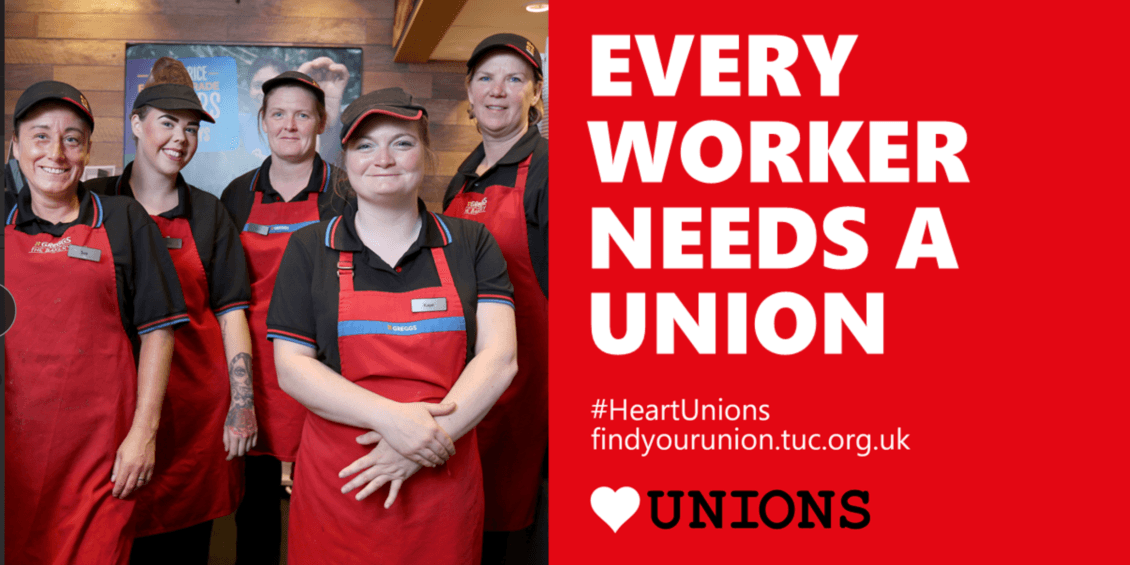

This week is HeartUnions week, a yearly opportunity organised by the TUC to celebrate the power of collective action and the vital role trade unions play in improving working lives across the UK. Let’s also take a moment to reflect on how those same principles that strengthen workplaces can strengthen democracy, particularly as we are about to see major changes through the new UK Employment Act.
Trade unions exist because our ancestors understood that when working people acted alone their voices were often ignored. Working together they could not be. Unions delivered paid holidays, fairer wages, safer workplaces and protection from unfair dismissal. Those principals haven’t changed today and there is more work to do. Today, with many workers facing insecure contracts, rising living costs and intense pressure at work, collective power is more important than ever.
The new UK Employment Act is an example of what happens when organised voices are heard. The Act promises stronger rights for workers, including improved protections against unfair dismissal, limits on exploitative zero-hours contracts, better parental and sick pay provisions, and stronger enforcement of workplace rights. These are solid policy improvements, affecting people’s daily lives, security and dignity at work. They reflect long-standing union campaigns, built through years of organising, negotiating, and standing together.
Joining a union means more than just insurance if something goes wrong, it also means having a say in the future of work. Union members are more likely to benefit from fair pay and decent conditions, but importantly, they also give people confidence and agency. They give people a sense that they are not powerless in the face of large systems or decisions made over their heads.
However, the lesson of HeartUnions Week does not stop at the workplace. It extends to our wider political system. The UK’s First Past The Post system often delivers governments with sweeping power based on a minority of votes. In fact, the majority of the time those governments have been anti-union and not afraid to show it while exercising that power. This creates a cycle where one government introduces reforms such as the Employment Act, only for a future government to roll them back. For working people this means constant uncertainty and instability.
Proportional Representation (PR) offers a different path. A path rooted in the same values as the trade union movement. Under PR, seats in Parliament more accurately reflect the votes cast. This means broader representation, more cooperation between parties and policies shaped by consensus rather than a narrow minority view. Crucially, it makes it much harder for any single party to dismantle major reforms on a whim.
If the Employment Act were operating within a proportional system, successive governments would be less likely to undo its protections. Policies built through cross-party cooperation and public support tend to endure. Just as union-negotiated agreements are harder to ignore than individual complaints, legislation built on broad democratic backing is harder to unravel.
PR strengthens democracy. It reflects the reality of a diverse society and creates stable outcomes that are inclusive and fair. It shifts policy away from a winner-takes-all mentality and moves us towards collaboration, negotiation and shared responsibility, the very same principles that underpin effective trade unionism.
Electoral reform and trade unionism are both about shifting power from the few to the many. Both are about ensuring systems serve people, not just institutions. And both recognise that lasting change doesn’t come from isolated action, but from collective effort.
When we stand together, whether at work or at the ballot box, we don’t just win better policies, we build stronger communities and a future where progress is permanent.