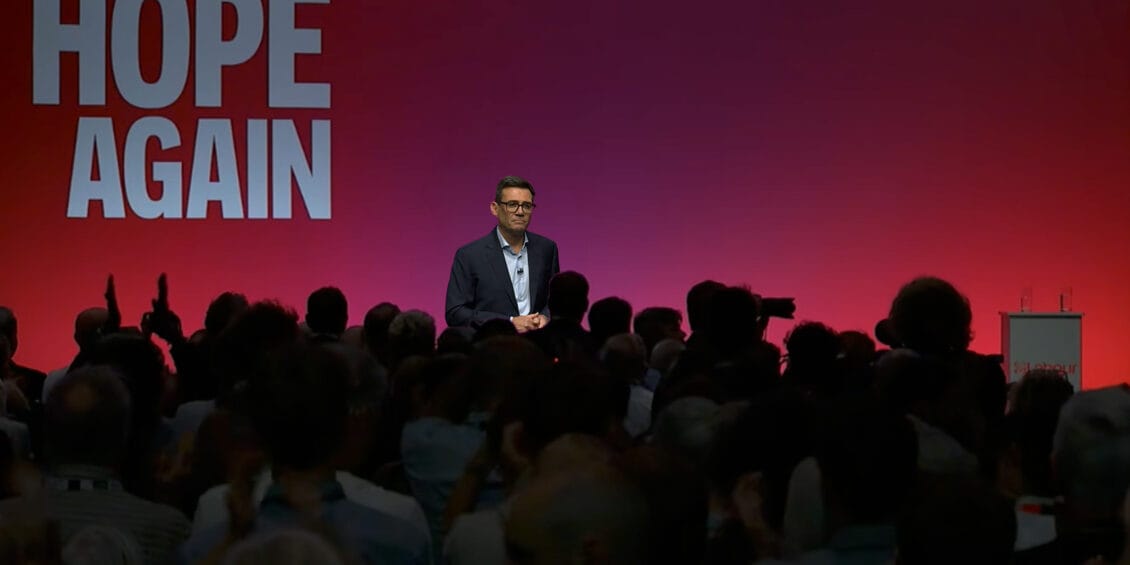

It was the moment we had all been waiting for but hardly dared hope for. Speaking in Liverpool, in his first speech as Labour Party Leader in September, our new prime minister, Andy Burnham said,
“In past years, you have voted twice to support electoral reform. I hear you. I agree with you.
“We will contest the next election with a manifesto commitment to change the electoral system, so that everyone’s vote counts and everyone’s voice is heard.”
He went further, announcing a new National Commission on Electoral Reform and inviting all the political parties to be part of its work.
Darren Hughes, Chief Executive of the Electoral Reform Society writes more in his blog about how we got here and what happens next.
The announcement came after a flurry of activity throughout August. This included a YouGov poll showing that the majority of Labour MPs back review of voting system reported in LabourList and an article in the Observer from former Labour leader Neil Kinnock saying that first past the post is no longer fit for purpose and calling for Andy Burnham to lead the way.
Representation of the People Bill Advances Key Democratic Reforms
The above announcement was doubly welcome because despite huge efforts by 185 MPs, the amendment to the Representation of the People Bill calling for a National Commission on Electoral Reform was ruled ‘out of scope.’
The Bill rolls on nevertheless and will make it possible to vote without photographic identification, lower the voting age to 16 and tighten restrictions on political donations.
UK IN A CHANGING EUROPE
UK in a Changing Europe and the Resolution Foundation has published Policy landscape 2026, a report that includes a chapter on electoral reform. Although written just before Andy Burnham’s announcements, it provides a neat summary of where we are and covers the state of the political debate and the decisions to be made. It’s a good read for anyone coming to this for the first time or wants a quick overview.
UCL CONSTITUTION UNIT LAUNCHES NEW PROJECT
Last week UCL’s constitution unit launched a new project into the effects of electoral systems. The project will map the effects of different electoral systems, and what impact they might have if used for electing the House of Commons. This is a three-stage project that will look first at the criteria that campaigners and others use when evaluating different systems and then relate that to international evidence and then relate all of that back to the UK. You can join their mailing list for updates.