
A guest blog by Mark E Thomas, Founder of The 99% Organisation
Most constitutional reform is based on the “good chaps theory” of politics according to which, although politicians vary in their effectiveness and competence, they’re all working for the good of the country.
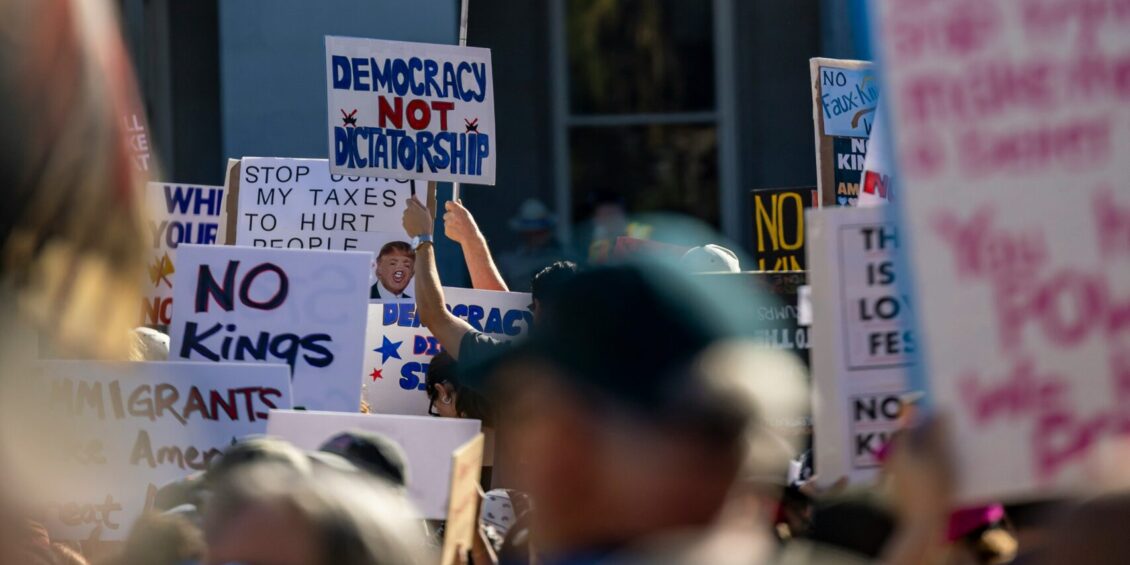
What is happening in the United States today shows the power of a bad actor, even with a constitution specifically designed to stop tyranny.
This poses a question: can we stop something similar from happening here?
We set up a project with other concerned institutions to explore that question. Our conclusion is that we can dramatically reduce the risks if we move fast.
The warnings have long been clear and the consequences of doing nothing are unthinkable. Fortunately, there are things that we can do, and we should do them as a matter of urgency.
The warning signs
Lord Hailsham warned us of the risks of ‘elective dictatorship’ 50 years ago and we have evidence that he was right:
- After Brexit, the Intelligence and Security Committee highlighted the risk that Russia had meddled in the referendum and called for a full Inquiry; and Carole Cadwalladr exposed the roles of organisations like Facebook and Cambridge Analytica in manipulating voters’ perceptions;
- In Trump’s first term, he stacked the Supreme Court with loyalists, and of course refused to accept the result of Biden’s election and attempted an insurrection;
- In the UK, Johnson and Cummings were not systematic in many things, but when it came to unwinding our checks and balances, they were very effective;
- But the biggest warning sign is Trump’s current presidency, and the implementation of Project 2025 in which he has moved extremely quickly to remove all remaining checks and balances, and his Budget has created the largest upwards transfer of wealth in US history.
And right now, we see Musk and Trump pushing far-right narratives, not just domestically but around the world and – and in particular in the UK.
Farage has made clear his admiration for Trump’s programme and his desire to do something similar in the UK. There is a think tank developing a Project 2025 equivalent for Reform, say Project 2029 (P2029), funded by US donors.
And, according to current polls, Reform is ahead of the other parties on 29% of the vote. Under our current voting system, that could give them a majority in Parliament and enable them to push through the sorts of unpopular changes which P2029 would contain: scrapping the NHS and replacing it with a private insurance-based scheme; industrial scale deportations; removing human rights legislation; slashing public services to fund tax cuts for the wealthy; unwinding checks and balances and attacking ‘activist’ judges, lawyers, journalists and academics.
The consequences of doing nothing
Things might change without intervention. But with the fiscal rules we have today, economic renewal is improbable, and the 10-year plan makes a turnaround in NHS performance unlikely.
If Reform wins, we should expect many of Farage’s voters to be angry and disappointed – as with Brexit, the promised upsides would not materialise, except for the very wealthy, but the downsides would be catastrophic. The NHS policy alone would drive many into bankruptcy, while others would simply have to do without treatment. And we should not expect to retain our human rights.
Economically, socially and democratically, Britain would be transformed for the worse.
What can we do?
The most obvious thing is for the government simply to deliver the first half of the promised ‘decade of national renewal.’ Unfortunately, that would require major U-turns; and even if it happened, there is little time for the benefits to be felt. Delivery is vital for the good of the country, but it is not enough to deal with the threats to our democracy.
The second thing is to prevent electoral distortions. We should take dark money out of politics and tackle disinformation. In practice they are both difficult to do sufficiently well to reduce the risk of a populist party being elected with the support of foreign donors, hostile States like Russia, and compliant media.
The third thing is to entrench protections so that, if a populist far right party were able to come to power, there would nevertheless be checks and balances in place. This is also difficult in our system where a parliamentary majority permits virtually anything.
Even with these measures in place, the risk to the UK remains unacceptable.
There is one other measure which would help enormously: the introduction of proportional representation (PR). Our current voting system, first-past-the-post (FPTP), distorts voters’ intentions. Usually, it gives far too large a majority to the party with most votes. Labour got a huge boost under FPTP at the last election (34% of the vote leading to 63% of the seats) whereas Reform got only 5 (less than 1%) seats for 16% of the vote. In contrast, PR ensures that parliament accurately reflects how people voted. If Reform were to win 30% of the votes, they might get a majority of seats under FPTP; but under PR, they would have only 30% of the seats and would require coalition partners to enable them to implement P2029.
Conclusion
Without rapid defensive action, Britain may well go the way of the US and become a formerly-developed country with an increasingly impoverished population living in a flawed democracy.
We need our politicians to act.